Fun and Effective Alphabet Letter Tracing for Early Learners
Developing a fluid, confident pencil stroke takes time and proper guidance. These printable tracing sheets offer large, clear pathways for young learners to navigate complex letter structures with decreasing frustration.
What’s Included in the Alphabet Letter Tracing Pack
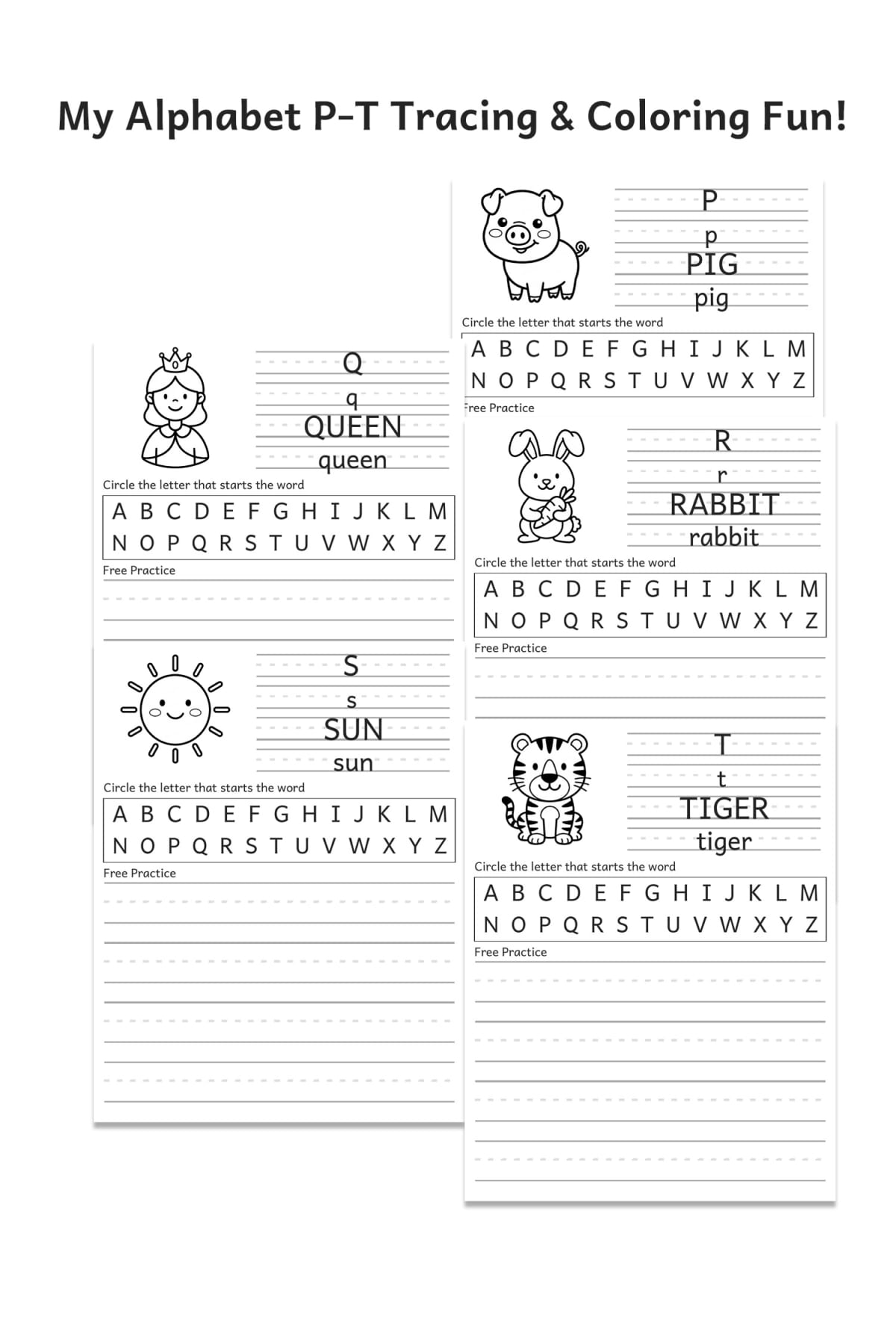
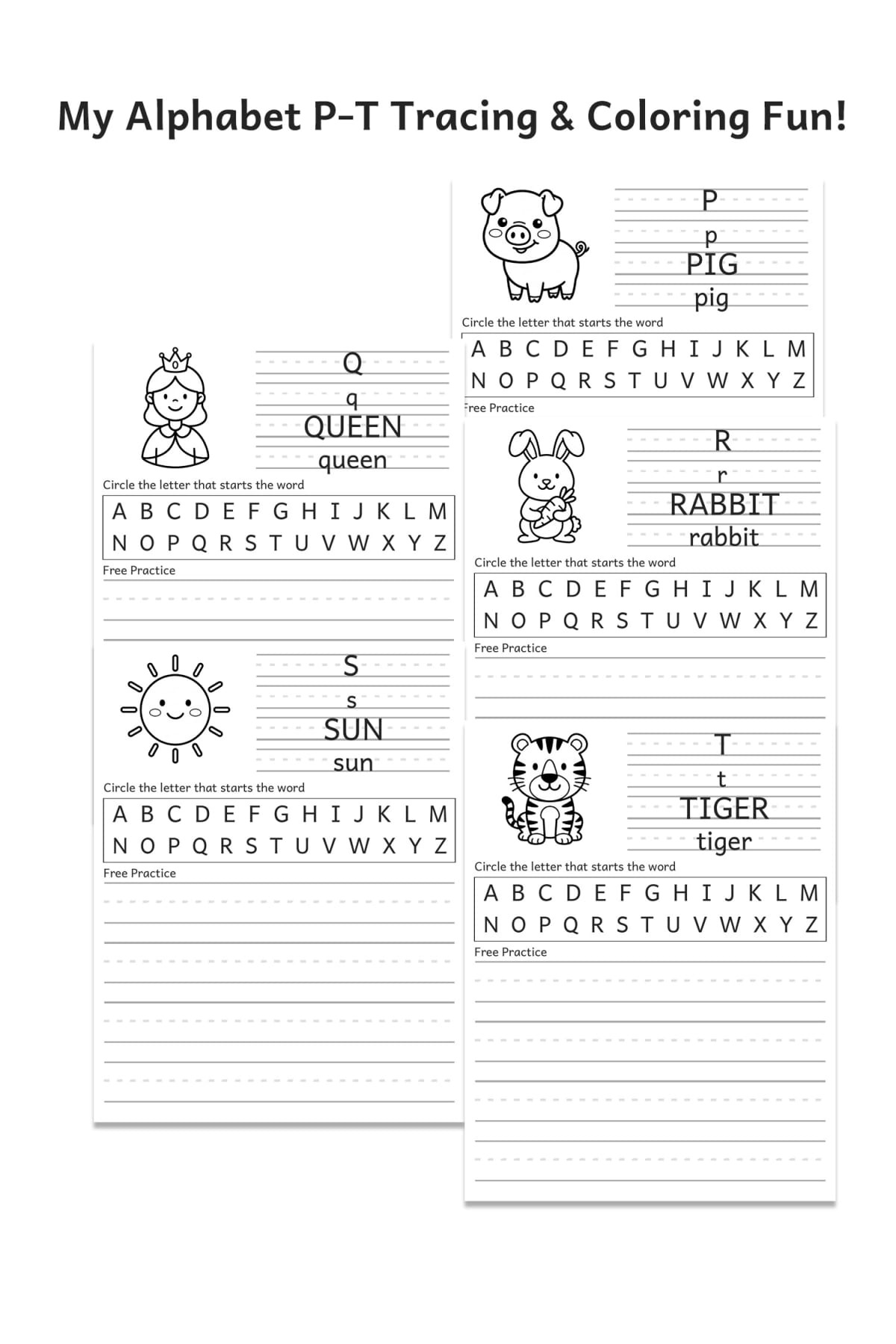
Our featured worksheet collection covers five key letters of the alphabet: P, Q, R, S, and T. Each page follows a structured layout that systematically builds foundational handwriting and phonics skills.
Every single worksheet includes four core interactive components designed to maximize learning retention for young students:
- Cute Illustrative Pictures for Coloring: Each sheet features an adorable line-art image representing the target beginning sound (Pig, Queen, Rabbit, Sun, Tiger). Coloring these cute images develops grip strength and visual engagement.
- Guided Tracing Lines: Dotted lines guide children through writing both uppercase and lowercase versions of the focus letter. Children also trace the full target word in both capital and lowercase styles.
- Alphabet Recognition Grid: A complete A-to-Z reference box appears on each page where kids circle the specific starting letter for the target word. This solidifies letter identification within the entire alphabet sequence.
- Free Practice Writing Space: Primary dotted handwriting lines at the bottom provide ample room for independent writing practice without assistance.
Detailed Page Breakdown: Letters P Through T
The worksheet set covers five specific letter themes with clear visual illustrations and vocabulary building blocks:
- Letter P Page: Features an adorable pig illustration alongside guided practice for uppercase ‘P’, lowercase ‘p’, and the full word ‘PIG’.
- Letter Q Page: Displays a cute queen graphic with dedicated handwriting practice for ‘Q’, ‘q’, and the complete word ‘QUEEN’.
- Letter R Page: Highlights a sweet rabbit holding a carrot, pairing letter formation with tracing the word ‘RABBIT’.
- Letter S Page: Showcases a bright smiling sun graphic alongside capital and lowercase tracing for ‘S’, ‘s’, and ‘SUN’.
- Letter T Page: Includes a friendly tiger illustration with step-by-step guidance for writing ‘T’, ‘t’, and ‘TIGER’.
Key Developmental Benefits of Alphabet Letter Tracing
Engaging in structured alphabet letter tracing on a regular basis provides numerous developmental advantages for growing children. These printable sheets address multiple early learning goals simultaneously within a single worksheet format.
1. Fine Motor Skill Development
Holding a pencil and following dashed line paths requires precise hand-eye coordination and fine muscle control. Tracing dashed lines strengthens pencil grip and improves finger dexterity needed for future writing stamina.
2. Early Phonics & Beginning Sound Recognition
Associating letters with concrete pictures—such as ‘T’ for tiger or ‘S’ for sun—strengthens phonemic awareness. Children visually connect the letter shape with its corresponding initial phonetic sound.
3. Capital and Lowercase Letter Differentiation
Understanding the difference between uppercase and lowercase forms can be tricky for young learners. By presenting both letter cases side-by-side on three-line handwriting guides, children quickly grasp relative letter proportions.
4. Sight Word Recognition and Vocabulary Building
In addition to single letters, children practice tracing full words like ‘queen’ and ‘rabbit’. This early exposure reinforces spelling patterns and builds confidence in reading simple vocabulary words.
Step-by-Step Activity Extensions for Teachers and Parents
To get the most out of these handwriting printables, try integrating these creative hands-on extensions into your home or classroom routine.
Step 1: Multi-Sensory Warm-Up
Before putting pencil to paper, have children trace the letter shapes in the air using their index fingers. You can also have them trace letters in a tray of colored sand or shaving cream for tactile stimulation.
Step 2: Interactive Sound Hunt
Ask children to pronounce the letter sound out loud while coloring the illustration on the page. Challenge them to find three additional items in the room that start with that same target sound.
Step 3: Alphabet Grid Search Race
Turn the “Circle the letter” section into a mini-game! Use a bright highlighter or place a small bingo chip over the correct starting letter in the letter box.
Step 4: Independent Writing Challenge
Once guided tracing is finished, encourage kids to attempt writing the letters independently in the free practice section. Praise their effort and progress rather than focusing solely on perfect accuracy.
Frequently Asked Questions About Alphabet Letter Tracing
Why is alphabet letter tracing important for preschoolers?
Alphabet letter tracing helps young learners build muscle memory, master pencil control, and understand stroke order. It bridges the gap between mechanical hand movements and letter recognition essential for reading literacy.
At what age should children start tracing letters?
Most children are ready to begin basic letter tracing between ages 3 and 5. It is best to start after children demonstrate comfortable pencil control through simple shape tracing and coloring.
How can I make tracing worksheets more reusable for my class?
You can slide printed pages into dry-erase pockets or laminate them for long-term use. Children can practice using colorful dry-erase markers and easily wipe the pages clean for repeat learning sessions.
Unlock Your Free PDF Printable
Enter your email below to get instant access to the worksheet.