Building Literacy Foundations with Alphabet Tracing Worksheets
Every strong reader and writer has to start at the very beginning. These introductory tracing pages are designed specifically for beginners, offering bold dashed lines that guide hesitant hands through their very first letter formation attempts.
What is Included in the Printable A-E Set
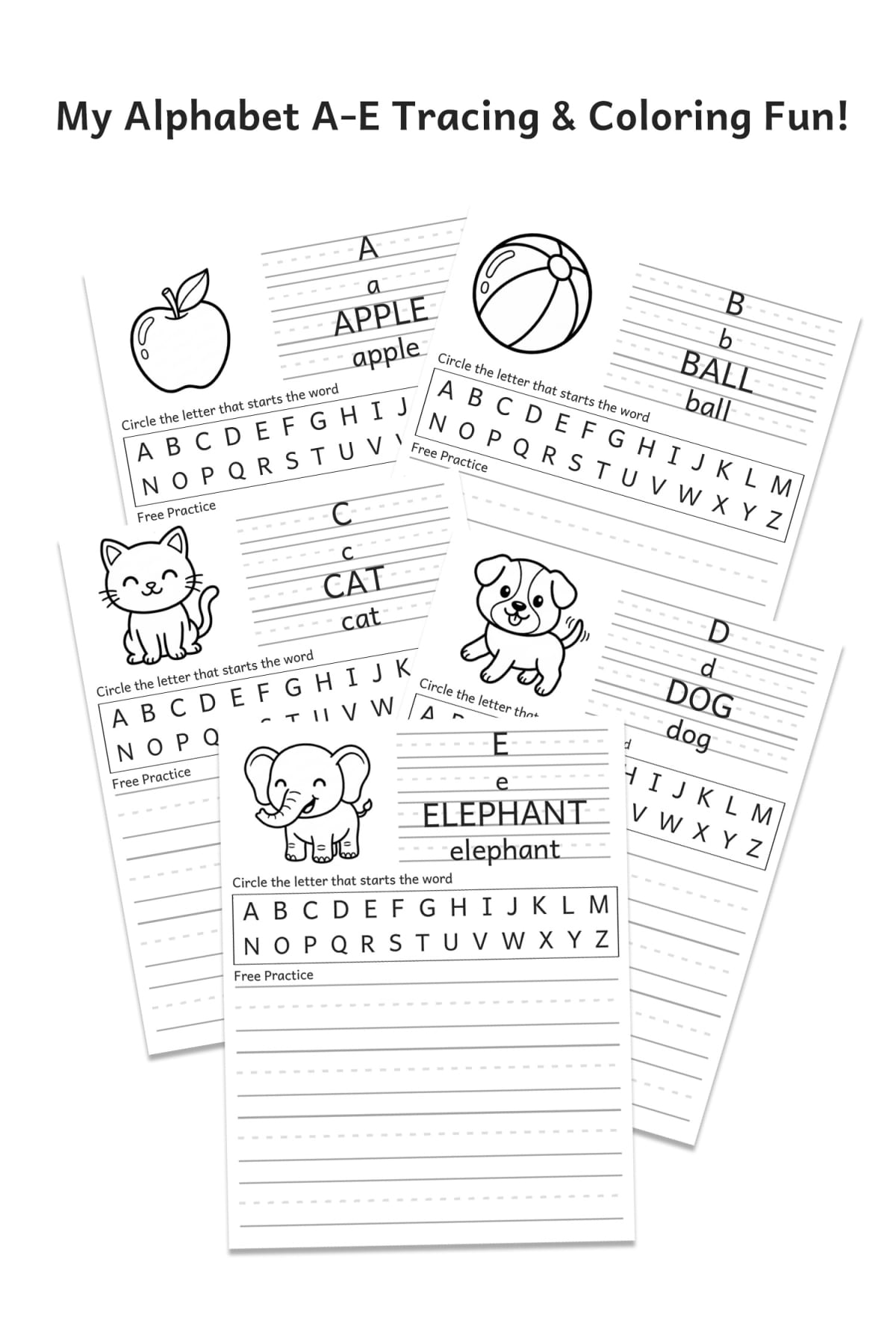
This beginner printable set features five dedicated pages—one for each of the first five letters of the alphabet: A, B, C, D, and E. Each page offers a comprehensive, multi-sensory learning layout designed to keep young minds focused and active:
- Clear Object Illustrations: Every sheet includes a large, simple line-art illustration representing the featured letter’s initial sound—an apple for A, a ball for B, a cat for C, a dog for D, and an elephant for E. Children can color these images, reinforcing visual association while exercising hand muscles.
- Guided Letter Tracing: Clear dotted lines help children practice writing both the uppercase and lowercase forms of each target letter (A/a, B/b, C/c, D/d, E/e).
- Vocabulary & Word Tracing: Directly beneath the letter guides, full words are presented in both ALL-CAPS and lowercase letters (e.g., “APPLE” and “apple”). Tracing full words helps children understand how individual letters combine to form written speech.
- Interactive Alphabet Sequence Strip: A full A-to-Z letter line is prominently displayed with the prompt, “Circle the letter that starts the word.” This interactive component strengthens letter identification and alphabetical ordering skills.
- Primary Line Free Practice: The bottom portion of each sheet provides primary writing guidelines (top line, middle dashed line, baseline) for independent practice once kids feel comfortable tracing.
Key Educational & Developmental Benefits
1. Fine Motor & Pencil Control Development
Before children can write fluidly, they need to develop hand strength, finger dexterity, and visual-motor integration. Tracing dotted lines provides helpful boundaries that guide small hands, helping children refine their pencil grip and spatial awareness step by step.
2. Phonemic Awareness & Sound Association
Connecting the letter shape to its sound is crucial for early reading. By looking at the picture of the cat while tracing the word cat and circling the letter C on the strip, children engage multiple senses to anchor the /k/ sound to the symbol C.
3. Multi-Level Differentiation
Not all early learners master skills at the exact same pace. These versatile alphabet tracing worksheets accommodate different skill levels in one page. Beginners can focus exclusively on coloring and tracing the main letters, while more advanced students can complete the word tracing, alphabet strip search, and independent free-writing lines.
Actionable Activity Extensions for Classrooms and Home
To deepen engagement beyond the paper, try incorporating these hands-on activity ideas into your routine:
Sensory Sand Tray Matching
Before filling out the worksheet, place a shallow tray filled with colored salt or play sand in front of your child. Have them use their index finger to draw the letter A or B in the sand. Once they get a feel for the shape through sensory play, transition to pencil-and-paper tracing on the worksheet.
Beginning Sound Scavenger Hunt
Turn worksheet time into an active movement game! After completing the ‘D is for Dog’ page, challenge children to find three objects around the room that start with the /d/ sound (like a door, doll, or block). Bring the items back to the table and point out the letter D on their sheet’s alphabet strip.
Laminated Write-and-Wipe Literacy Centers
For educators and daycare providers, durability is key. Slide each printed page into a dry-erase sleeve or laminate them for reusability. Supply children with colorful dry-erase markers so they can trace, erase, and practice writing throughout the week without wasting paper.
Frequently Asked Questions
At what age should children start using alphabet tracing worksheets?
Most children are ready for basic letter tracing between ages 3.5 and 5. Look for signs of pre-writing readiness, such as the ability to draw simple lines, circles, and hold a crayon with a functional grip. For younger toddlers, focus on coloring and finger-tracing before introducing pencils.
How can I help a child who struggles with pencil grip?
If a child experiences hand fatigue or uses an awkward grasp, try switching to shorter, thicker writing utensils like broken crayons, golf pencils, or triangle-shaped markers. These smaller tools naturally encourage a proper tripod grip without requiring constant verbal correction.
Should children learn uppercase or lowercase letters first?
Children often recognize uppercase letters first because their geometric shapes (straight lines and simple curves) are easier to visually distinguish. However, because lowercase letters make up the majority of written text in books, teaching both forms together—as presented in these tracing pages—builds stronger reading readiness.
Unlock Your Free PDF Printable
Enter your email below to get instant access to the worksheet.